Executive Summary
This project focused on identifying and reducing early-stage lifecycle friction impacting activation, trust, and conversion for new users. By analyzing behavioral, support, and VoC signals across the first 90 days, I surfaced key breakdowns preventing users from progressing toward value.
Beginner and small-business users churned early due to confusion, weak workflow guidance, and trust-breaking moments before they reached meaningful value. This case study is grounded in interviews with early paid users (first 90 days) and supported by signals from churn patterns, VOC themes, support tickets, and lifecycle flows.
Core insight: product ambiguity and expectation mismatch were driving repeat support dependence. Customer Success repeatedly compensated for unclear setup, tool overwhelm, and uncertainty about “what to do next,” creating preventable cost-to-serve and compounding churn risk.
This work gave the Retention and VOC teams a shared first-90-day view of friction and a prioritization lens focused on activation, trust, and product clarity rather than onboarding attendance. Business signals supporting prioritization included ~500 CS hours per quarter spent on repeat onboarding support and ~$50K in estimated quarterly support labor tied to preventable onboarding friction.
TL;DR
The Problem
Early-stage churn was disproportionately affecting beginner and small-business users at Semrush. Misalignment between product design, onboarding strategy, and acquisition messaging led to user confusion, trust erosion, and mounting internal inefficiencies.
What I Did
I led a systems-level synthesis effort grounded in interviews with early paid users (first 90 days) and supported by churn patterns, VOC themes, support tickets, lifecycle flows, and internal onboarding/support signals. I translated those signals into journey-level artifacts that made friction visible across the first 90 days.
How this drove business impact
Connected onboarding friction to cost-to-serve and churn-risk signals so teams could prioritize activation, trust, and product clarity over attendance.
Outcomes
Established a shared, journey-level view of onboarding friction across the first 90 days (where trust broke, where users stalled, and where CS became the workaround)
Equipped Retention and VOC teams with artifacts they could use for prioritization and lifecycle planning (journey map, service blueprint, prioritization lens)
Shifted internal conversation from onboarding attendance metrics toward activation milestones, trust, and product clarity as success measures
The Challenge: Misaligned Effort, Missed Expectations
Customer Success teams were repeating high-effort walkthroughs, while beginner users often remained lost after setup. Leadership attention was focused on increasing onboarding attendance, but attendance was not the real problem. Many users still left without a clear sense of what to do next, whether they were using the product correctly, or how to turn setup into progress.
The true bottleneck was not support alone. It was product clarity, workflow guidance, and trust.
“I can see it does a lot more than what I use it for, but I don't know where to start half the time because there's so much.” — James, Business Owner, 2–5y experience
Strategic Tension Underneath the Friction
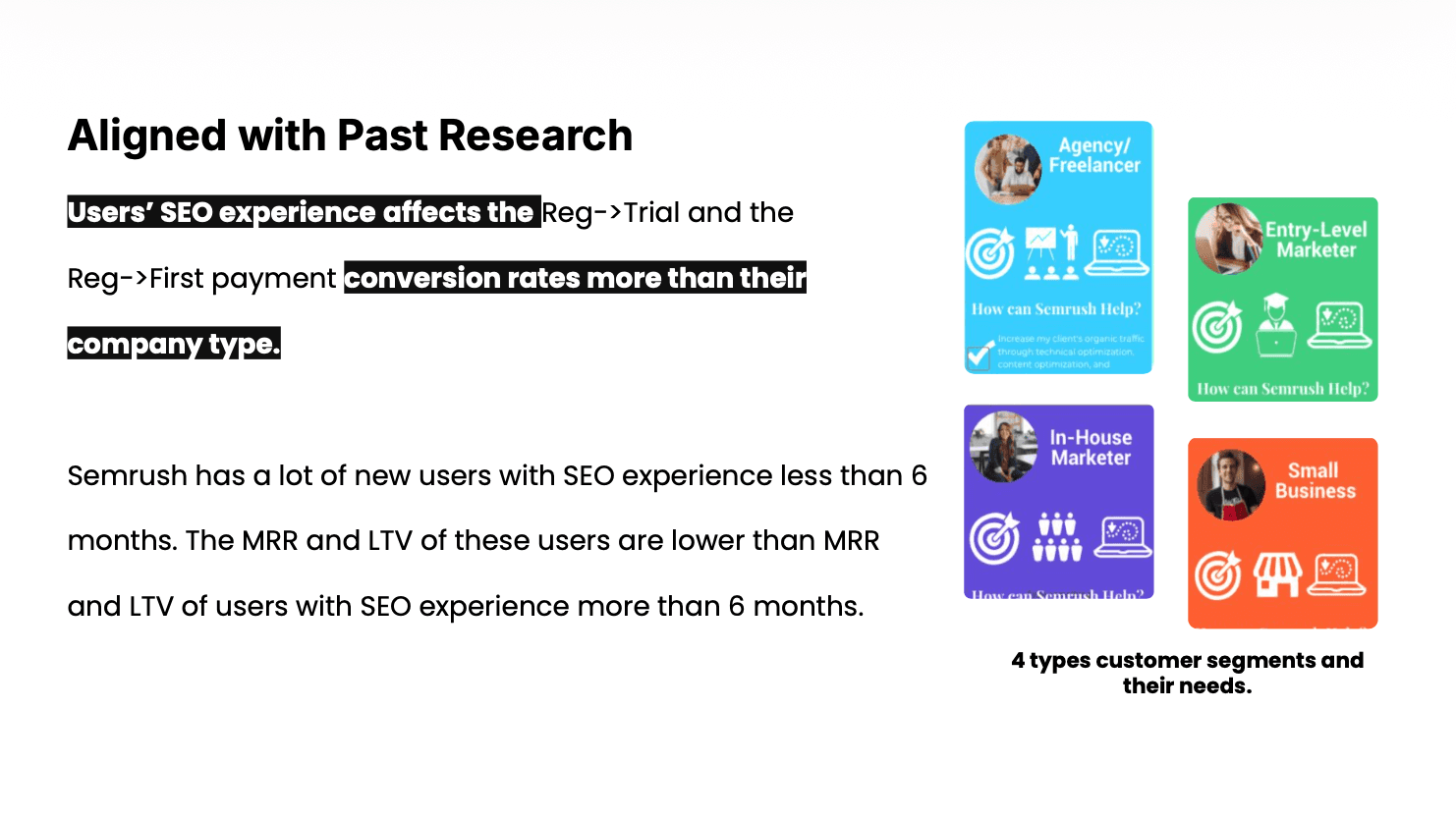
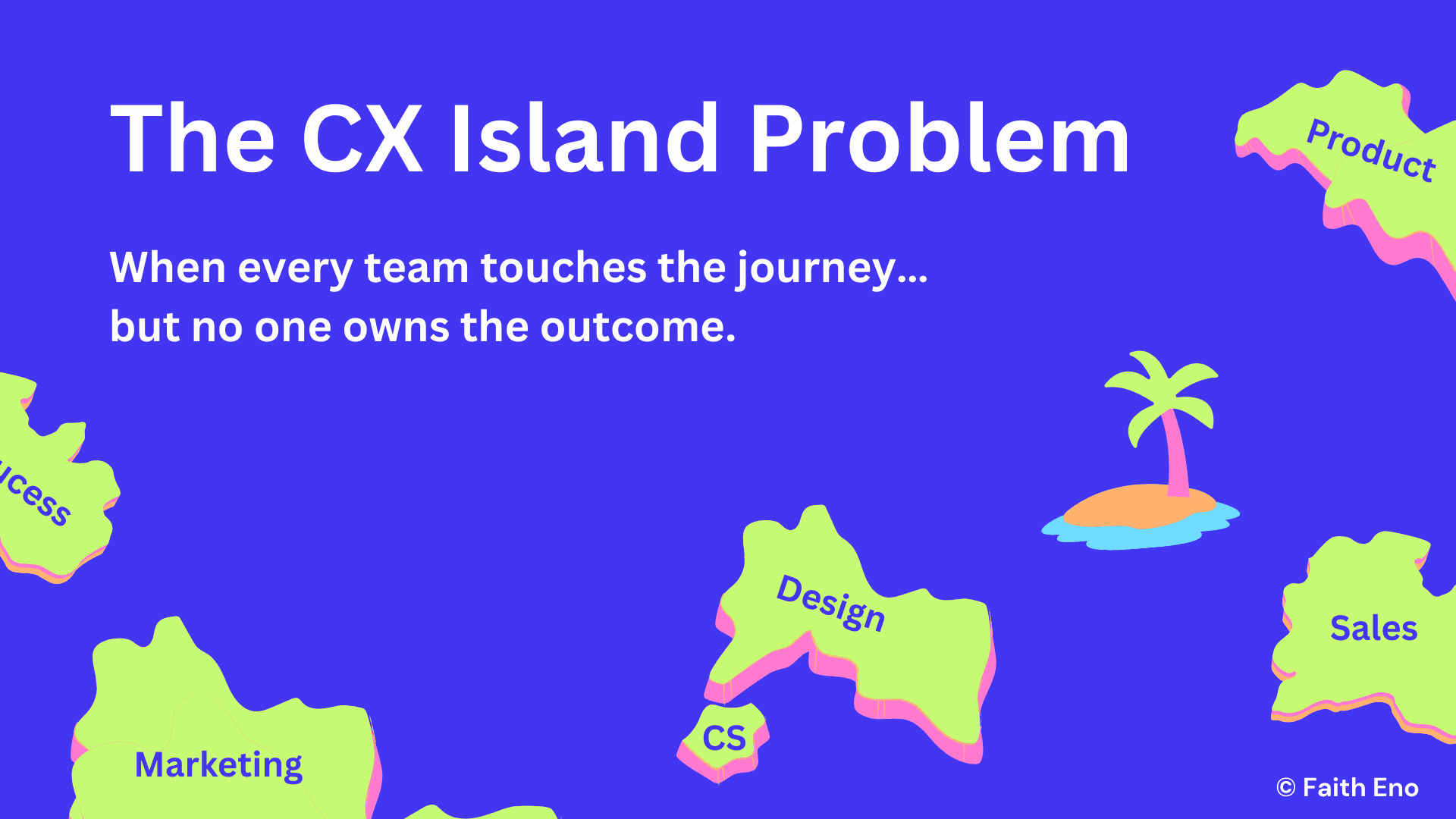
One reason this problem persisted was that the target user was not fully aligned across functions.
Marketing was successfully attracting beginner and small-business users, while the product experience often assumed greater SEO fluency, workflow confidence, and self-direction than many of those users had. That made onboarding friction harder to solve cleanly, because the underlying business question was still unsettled: which user segments mattered most, and was the product actually prepared to support them?
This turned onboarding into more than a support problem. It became a product-strategy and segmentation problem.
If beginner and SMB users were an important growth segment, then the product and onboarding experience needed to reflect that reality. If they were not, then the business needed to be clearer about who the experience was truly built for.
What I Did: Systems-Level Insight Gathering
Rather than treating onboarding issues as isolated usability problems, I looked across multiple evidence streams to identify where the same breakdowns repeated. I synthesized insights from early-user interviews alongside customer feedback signals, support burden patterns, and lifecycle behavior to show where unclear workflows, weak guidance, and product limitations were being absorbed by Customer Success instead of resolved in product.
My role
Built first-90-day journey artifacts to make friction patterns visible across touchpoints
Translated friction into business relevance using cost-to-serve + churn-risk signals
Led readouts that aligned teams on activation, trust, and clarity as onboarding success measures
Research Plan Snapshot
Decision to inform
Reduce early churn risk by improving activation, trust, and product clarity for beginner + SMB users in the first 90 days.
Objectives
Identify where users lose confidence
Identify what breaks trust before value
Identify workflow gaps driving repeat support demand
Method
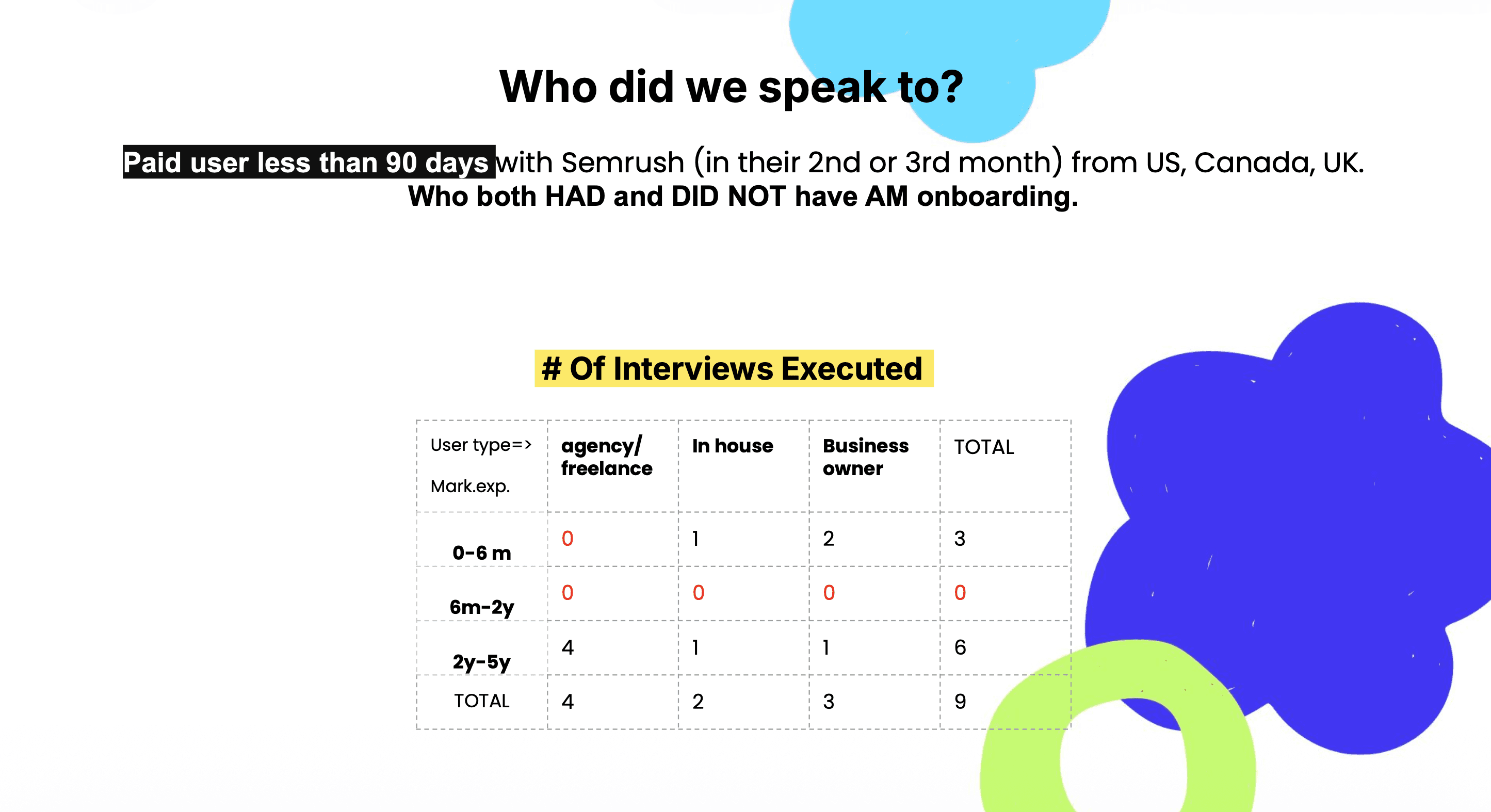
Semi-structured interviews with early paid users (first 90 days), triangulated with churn patterns, VOC themes, support tickets, lifecycle flows, and internal onboarding/support signals.
Participants
Paid users in months 2–3 across the US/CA/UK; included users with and without AM onboarding.
Analysis + outputs
Thematic synthesis → journey stages + simplified service blueprint → Trust–Break–Effort–Impact prioritization.
Key Tools & Frameworks
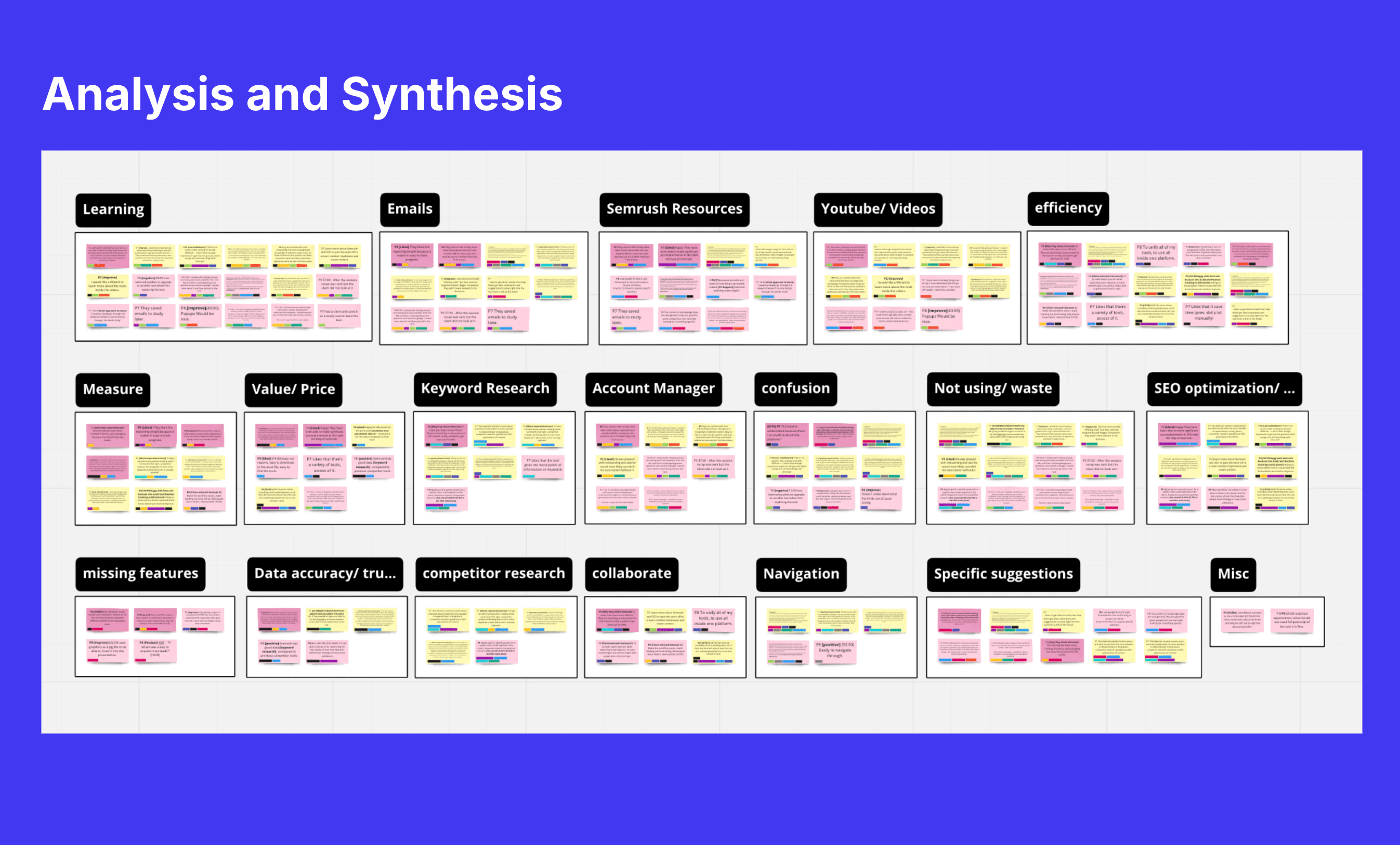
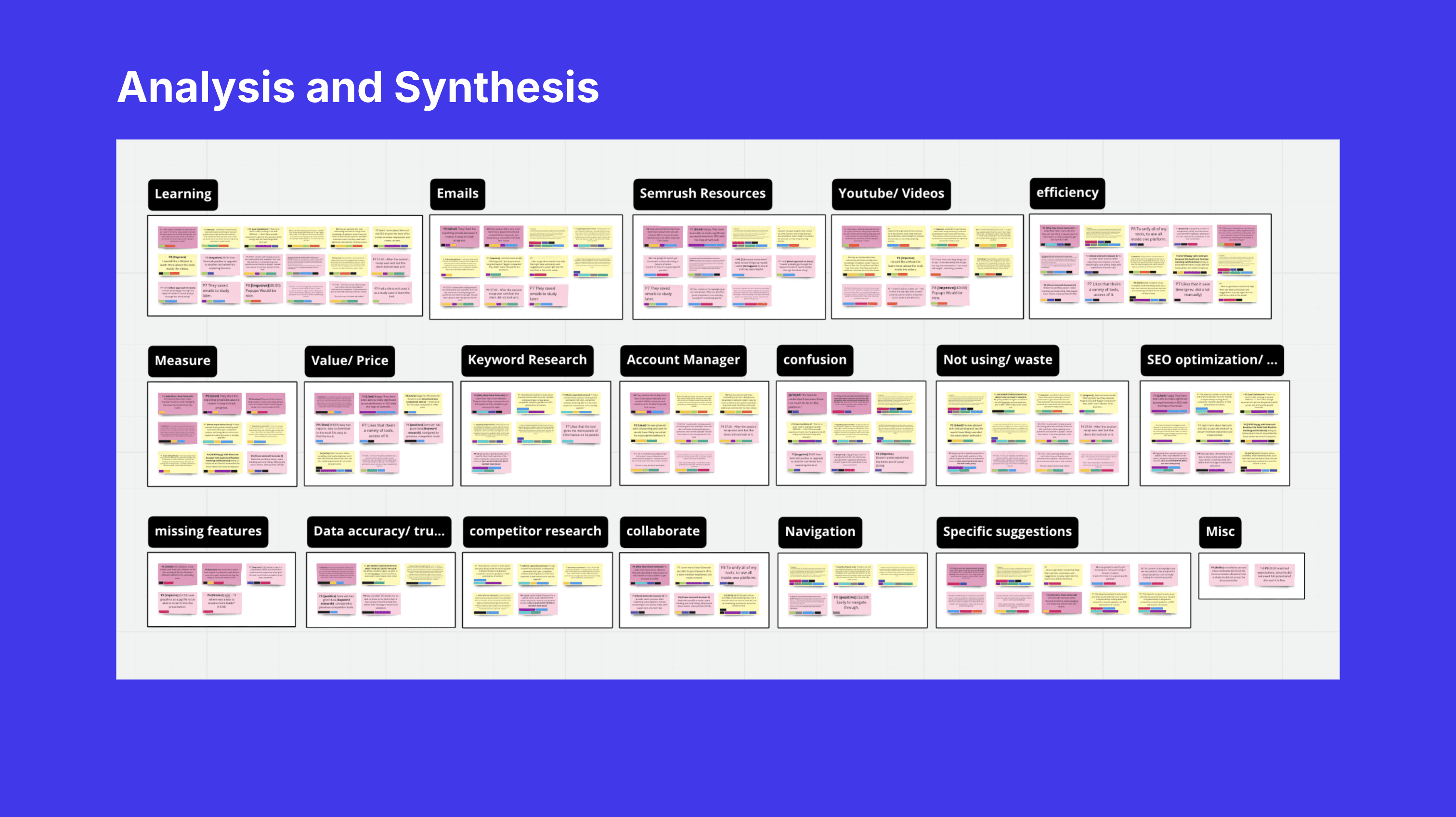
Thematic clustering in Miro
Service blueprint mapping across touchpoints, breakdowns, and workarounds
Journey mapping aligned to behavioral stages from first login to activation
A Trust–Break–Effort–Impact prioritization lens to connect friction to business relevance
Business Impact Signals
These signals helped teams prioritize by translating onboarding friction into operational and retention risk. By linking interview themes to repeat support effort, churn-risk scoring, and estimated labor cost, we clarified where early-product improvements could reduce cost-to-serve and improve activation.
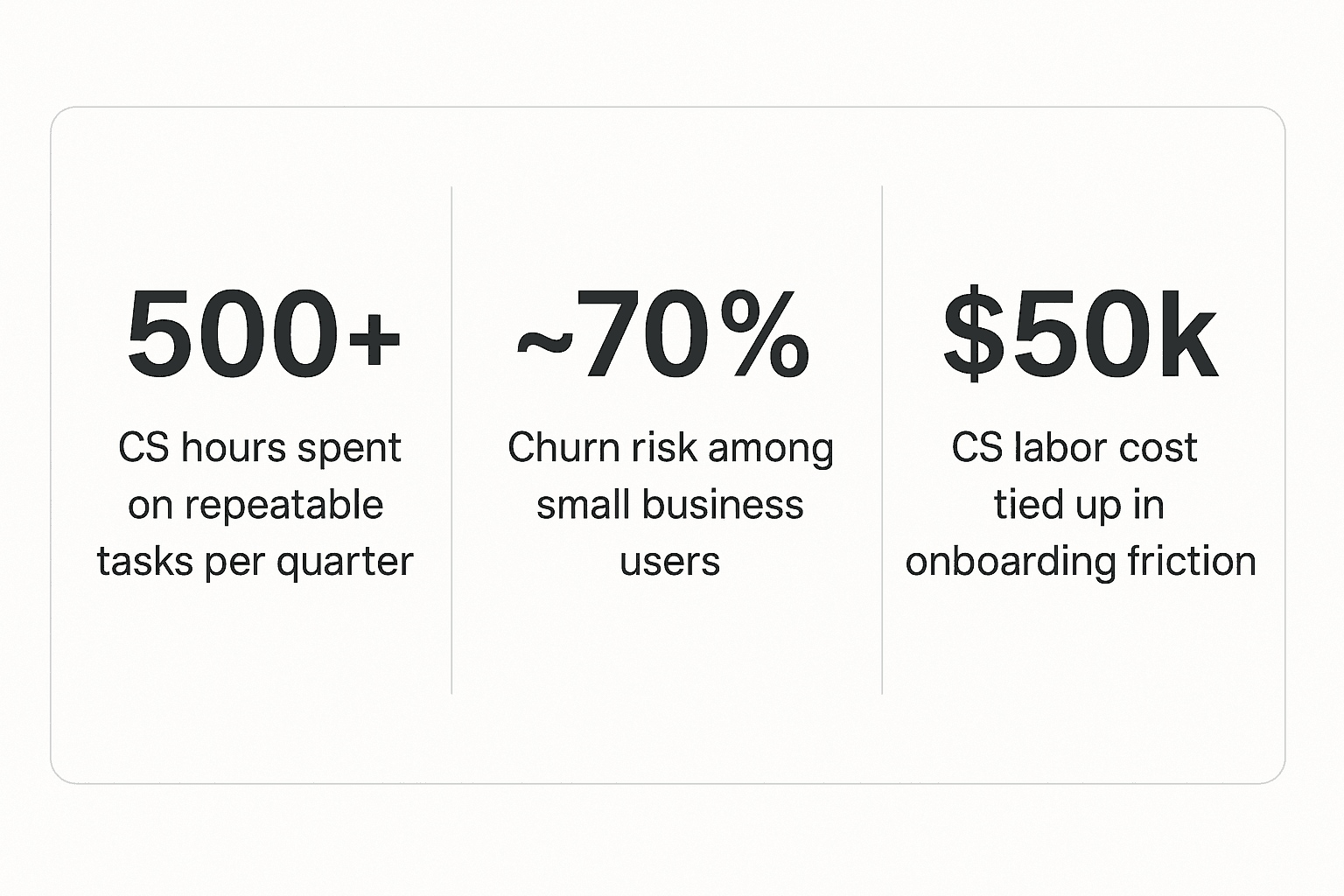
500+ estimated CS hours per quarter spent on repeat onboarding support
Highest-risk segment: beginner and small-business users in early onboarding
~70% churn risk score among small-business users, based on internal retention modeling
~$50K estimated quarterly support labor tied to preventable friction
Insights That Shifted the Conversation
Where are we using support as a crutch?
Repeated walkthroughs were compensating for product gaps rather than solving them. Users often needed human guidance to confirm setup, navigate tools, or determine the next action.
What breaks trust before value?
Surprise limits, unclear access, setup ambiguity, and uncertainty about whether tools were being used correctly created friction before users experienced meaningful value.
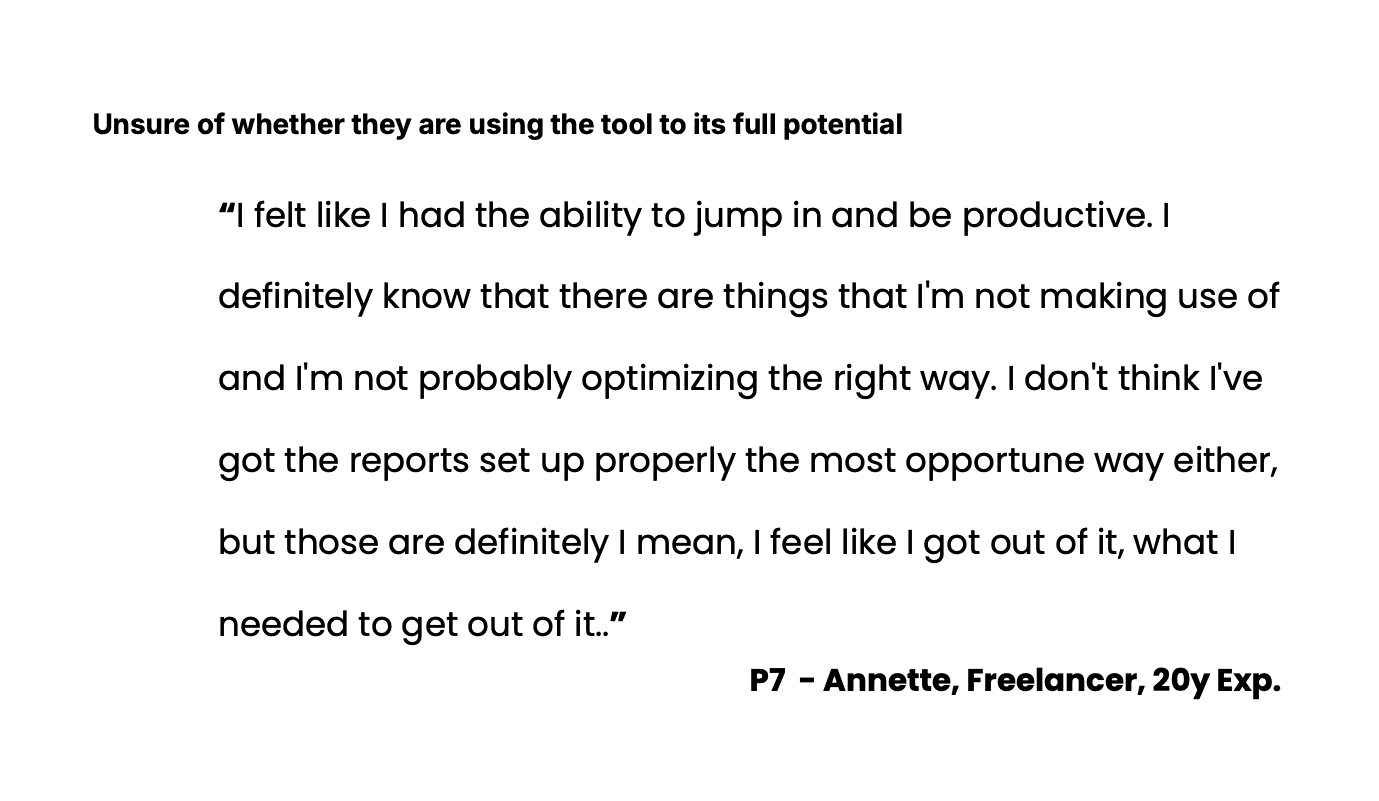
“I definitely know that there are things that I'm not making use of and I'm not probably optimizing the right way.” — Annette, Freelancer, 20y experience
Are we designing for experts only?
Experienced marketers were better able to self-navigate, while beginners were much more likely to need intervention, interpretation, or external guidance. The product expected a level of SEO knowledge and workflow confidence that many early users simply did not have.
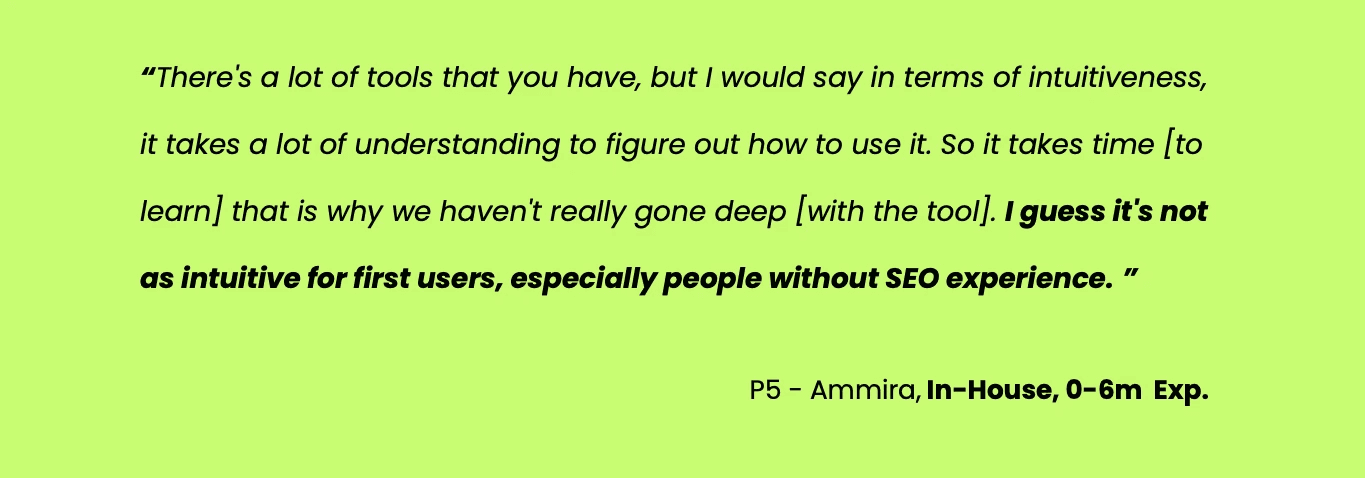
“There’s a lot of tools that you have, but… it takes a lot of understanding to figure out how to use it… it’s not as intuitive for first users, especially people without SEO experience.” — Ammira, In-House, 0–6m experience
Who succeeds vs. who slips through?
User outcomes varied sharply by prior marketing knowledge, business maturity, and ability to translate product breadth into a usable workflow. Users who already knew how to think in SEO tasks could self-serve more effectively. Beginners were more likely to stall, stick to a narrow subset of tools, or depend on support to bridge the gap.
What Was Breaking — and Why It Mattered
Fragmented Ownership
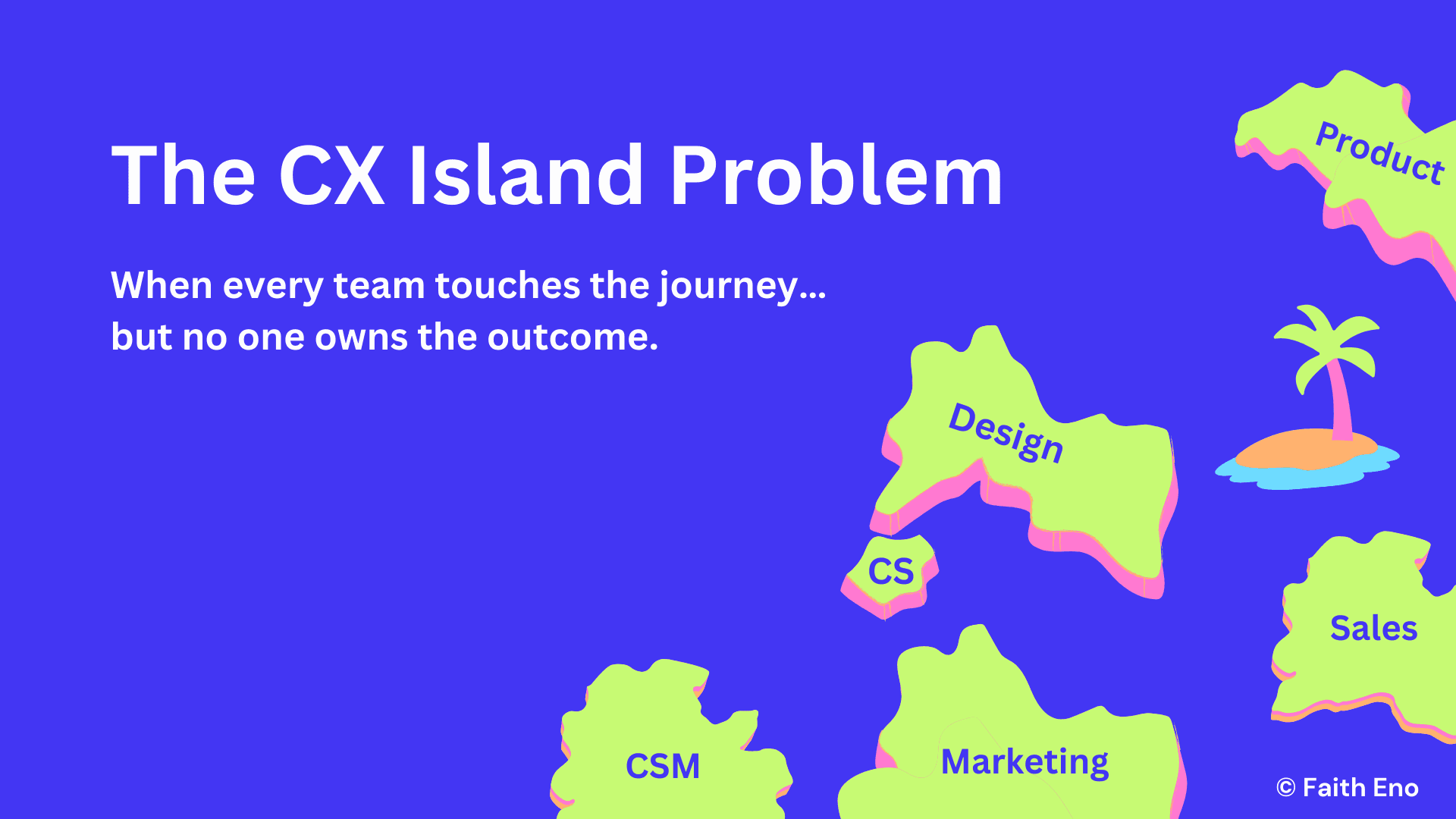
Five or more teams influenced onboarding, but no one owned the full first-90-day journey.
Reactive Load
Customer Success effort was being consumed by preventable confusion instead of higher-value strategic support.
Trust Erosion
Billing and paywall-related friction showed up among the earliest trust-breaking moments, while uncertainty about correct setup and product usage weakened confidence before users reached value.
Misaligned Fit
The product experience favored experienced marketers, but a large portion of the funnel consisted of first-time users and solopreneurs trying to learn as they went.
Service Blueprint
Redaction note: This blueprint is shared in simplified form for confidentiality. It highlights first-90-day friction points and user workarounds without exposing internal operational details.
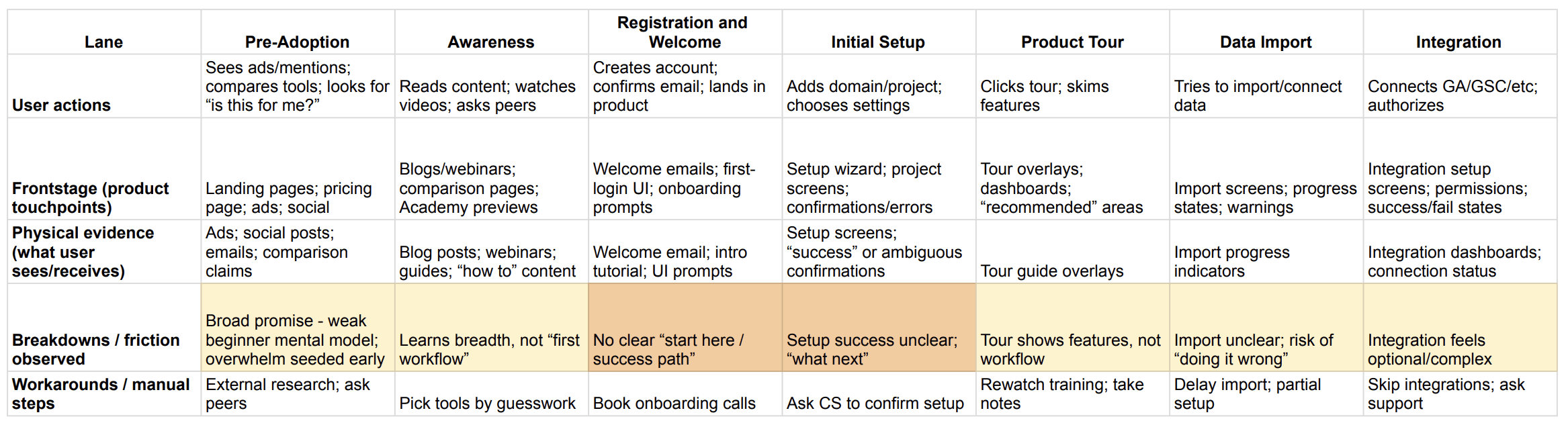
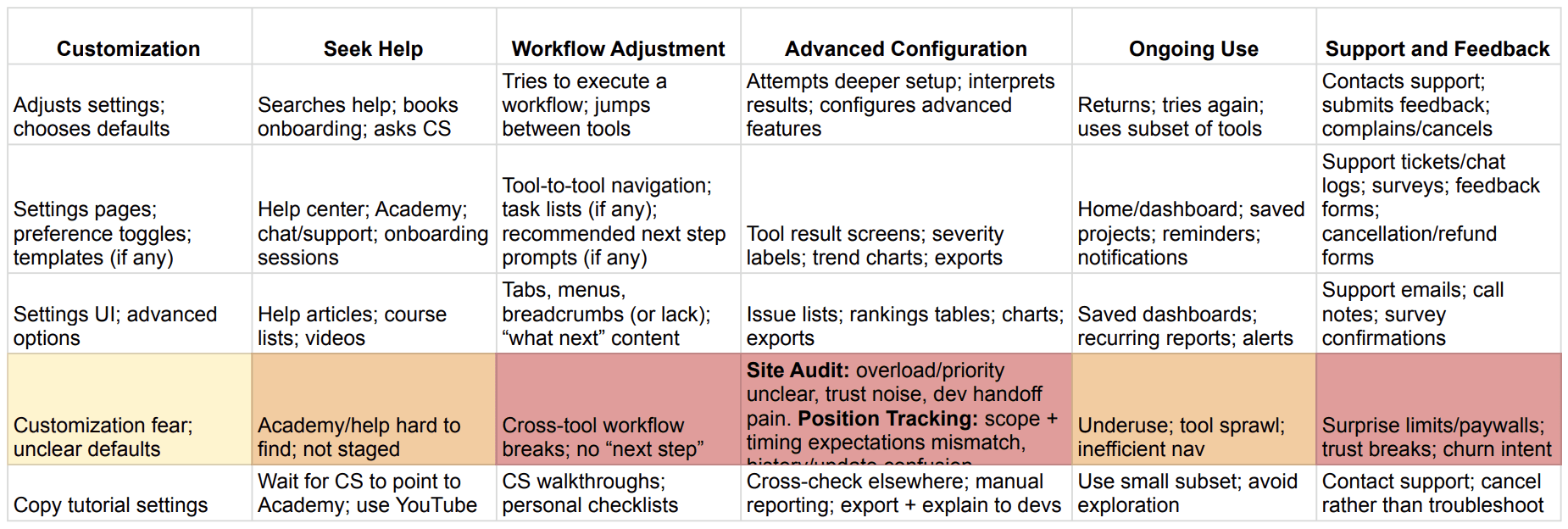
Rather than treating onboarding issues as isolated usability problems, I mapped the end-to-end journey to show how friction repeated across stages. Weak early guidance created confusion, mid-journey experiences failed to build momentum, and later-stage cross-tool breakdowns pushed users into workarounds, support dependence, or churn.
The blueprint made cross-team dependencies visible, showing where user friction was being absorbed by people instead of being resolved in product.
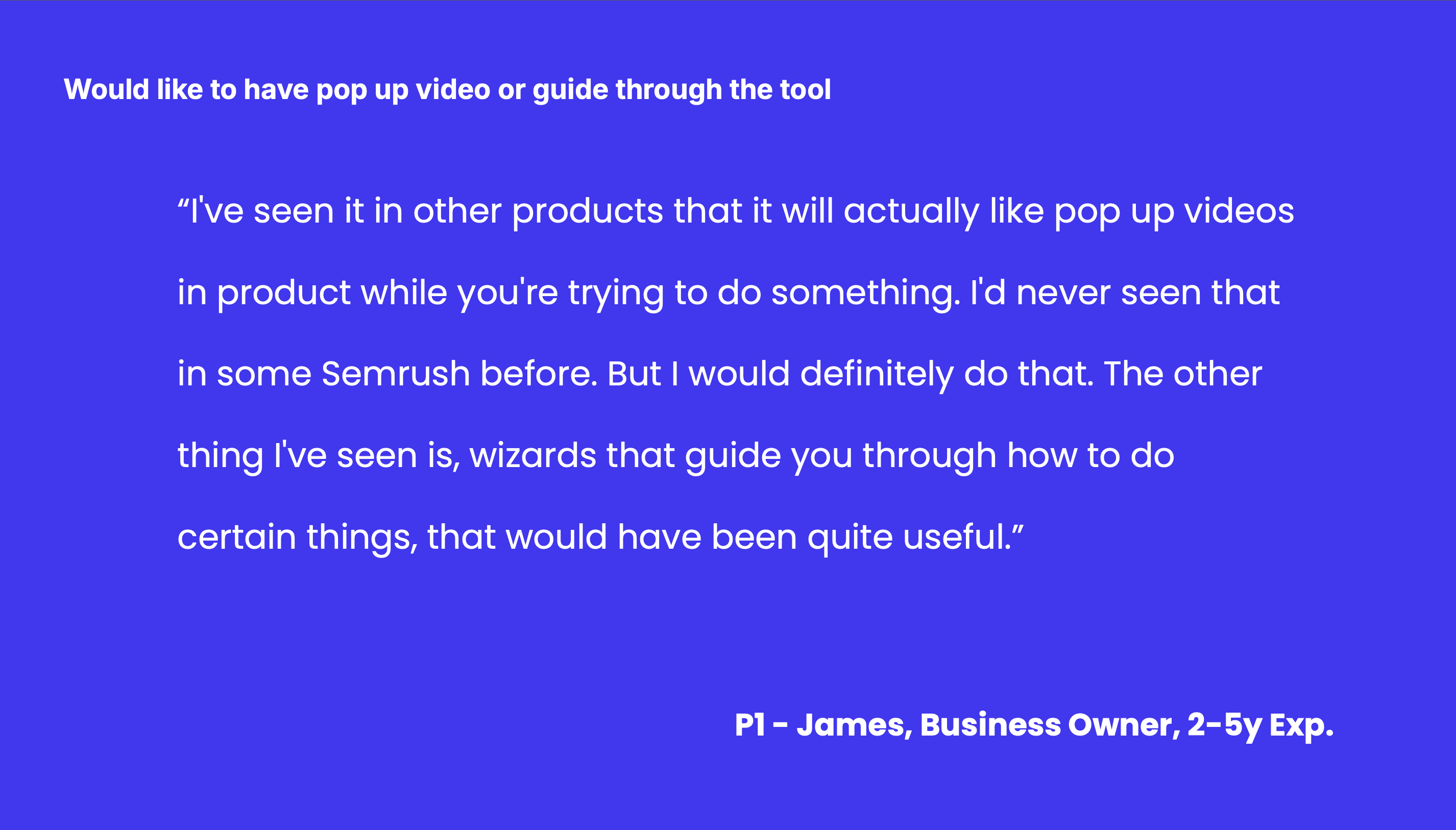
“Most of the times when I have a question, it's when I'm in the portal itself... if there was a search bar... in the portal itself, where you could just type in a question, I would use that a lot.” — Callum, Agency, 2–5y experience
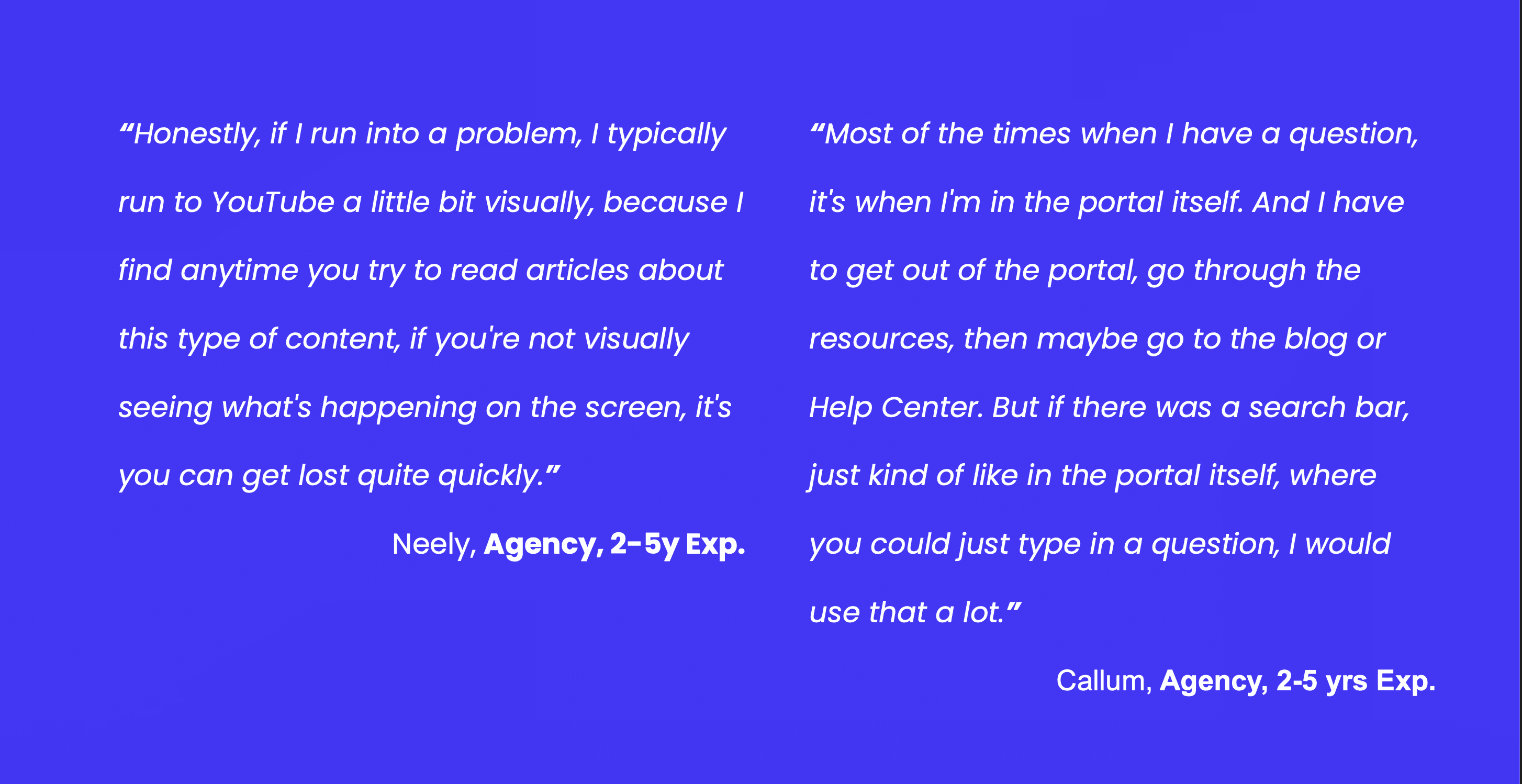
That kind of feedback reinforced a broader pattern: users wanted in-context guidance and faster answers while working, not a separate learning burden that pulled them out of the product.
Recommendation: Commit to Beginner Success
Decision
Commit to beginner and small-business activation as a priority growth segment, and design onboarding and early product experience to match their SEO fluency and workflow confidence.
Rationale
Beginner and SMB users showed the highest early churn risk and the highest repeat support load. The product experience often assumed expert mental models, which increased confusion, weakened trust, and delayed time-to-value.
What this means in practice
Simplify the first 7 days
Reduce tool sprawl and guide users through a single starter path with clear milestones and “what to do next” prompts.Guided workflows tied to outcomes
Replace “explore the platform” with outcome-based flows (e.g., identify a high-impact issue - fix it -confirm improvement).In-product coaching and confidence loops
Add contextual guidance and “Am I doing this right?” validation so users can progress without needing a walkthrough.Expectation alignment before trust breaks
Make limits, access, and next steps clear before paywalls or surprises erode confidence.
How success should be measured (business-facing)
Activation milestone completion rate for beginner + SMB cohorts
Time-to-first-value for beginners (first meaningful outcome achieved)
Reduction in repeat onboarding tickets/calls and CS walkthrough hours
Churn rate change in beginner + SMB cohort vs baseline
Reflection
When teams do not share a picture of the journey, they tend to ship disconnected fixes. This work made the invisible visible: where trust broke, where effort leaked, and what “better onboarding” actually needed to mean.
“[What to improve on next?] ... now I've done all the beginner and intermediate stuff, what are the real nuts and bolts of what I can do?” — Marc, SMB Owner, 0–6m experience
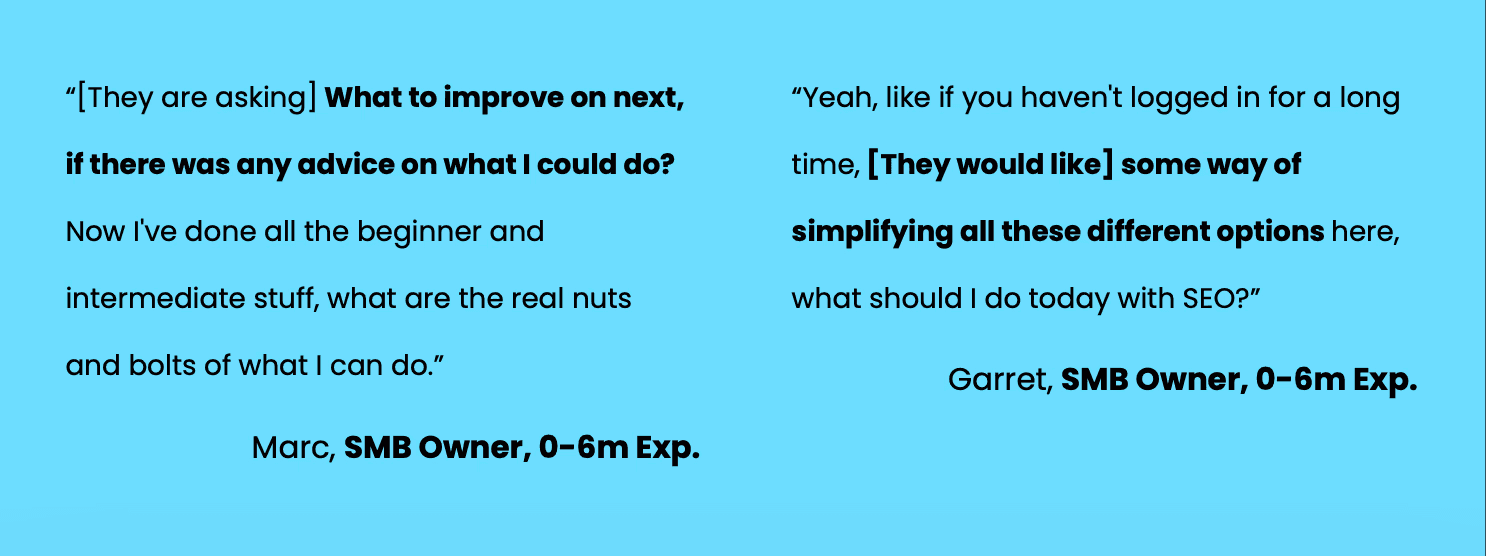
That question captures the core issue better than any metric alone. The problem was not simply that users needed more onboarding sessions. It was that the product did not consistently create clarity, confidence, or forward momentum on its own.
A deeper disconnect lay beneath the churn problem: Semrush was being marketed to beginners, while the product experience often required more fluency than many of those users had. That gap between acquisition messaging and actual usability increased the likelihood of confusion, weak activation, and churn.